What is Taoism? A Beginner’s Guide to Living in Flow

What is Taoism? A Beginner’s Guide to Living in Flow

You’ve probably heard the word “Taoism” before. Maybe you’ve seen the Yin Yang symbol or heard someone talk about “going with the flow.” But what is Taoism, really? And more importantly, why should you care in the 21st century?
After 29 years of studying, practicing, and teaching Taoist principles, I can tell you this: Taoism is not what most people think it is. It’s not a religion. It’s not about worshipping ancient gods or following rigid dogma. And it’s definitely not just some vague concept about being laid-back.

Taoism is a way of life that offers something our modern world desperately needs: a path back to simplicity, harmony, and natural power.  Let me show you what I mean.

What Taoism Actually Is (And Isn’t)

At its heart, Taoism is a philosophy that originated in ancient China over 2,600 years ago. The word “Tao” (pronounced “dow”) literally translates to “the Way” or “the Path.” But it means something much deeper than just a road or direction.

The Tao is the natural order of the universe. It’s the fundamental force that flows through everything—the seasons, the tides, your breath, your heartbeat. It’s the intelligence of nature itself.

Taoism isn’t about believing in the Tao. It’s about aligning with it. Living in harmony with the natural rhythms of existence rather than fighting against them.

Here’s what Taoism is NOT:

  • It’s not a religion (though religious forms exist)
  • It’s not about passivity or giving up
  • It’s not mystical nonsense
  • It’s not exclusively Eastern or incompatible with Western life

Taoism is a practical, embodied philosophy that anyone can practice, regardless of culture, background, or beliefs.

The Core Principles of Taoism

To understand Taoism, you need to grasp three fundamental concepts. These aren’t just abstract ideas—they’re living principles that can transform how you work, relate, and navigate life’s challenges.

1.   Wu Wei: The Art of Effortless Action
Wu Wei (無為) is often translated as “non-action” or “effortless action.” But this translation confuses people. It sounds like doing nothing, being lazy, or just letting life happen to you.

That’s not what it means at all.

Wu Wei is about acting in alignment with natural flow rather than forcing outcomes. It’s the difference between a salmon swimming upstream (exhausting, fighting nature) and a surfer riding a wave (skillful, working with nature’s power).

Think of water flowing down a mountain. It doesn’t force its way through rocks—it finds the path of least resistance. Over time, that gentle, persistent flow shapes canyons and moves mountains. That’s Wu Wei.

In practical terms, Wu Wei means:

    • Making decisions from clarity, not pressure
    • Knowing when to act and when to wait
    • Achieving your goals without burning out
    • Leading without dominating
    • Solving problems without creating new ones

I’ve seen executives transform their leadership style by applying Wu Wei. Instead of pushing their teams harder, they learn to remove obstacles and create conditions for natural excellence. The results? Better performance, less stress, more innovation.

2. Yin and Yang: The Dance of Opposites
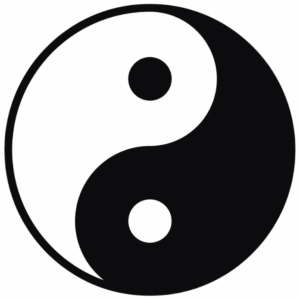
You’ve seen the symbol: a circle divided into black and white, each containing a dot of the other. But Yin and Yang are far more than a logo.

Yin and Yang represent the fundamental polarities of existence:

    • Yin: Receptive, feminine, cool, dark, restful, internal
    • Yang: Active, masculine, warm, light, energizing, external

Here’s the crucial insight: these aren’t opposites in conflict. They’re complementary forces in dynamic balance.

You can’t have day without night. Summer without winter. Action without rest. Inhale without exhale.

Modern Western culture is addicted to Yang energy. We glorify constant productivity, endless growth, perpetual activity. We’ve forgotten that sustainable success requires both.

The most successful people I work with—the ones who achieve without burning out—have learned to honor both energies. They know when to push forward and when to pull back. When to speak and when to listen. When to do and when to simply be.

3. Qi: Your Life Force Energy
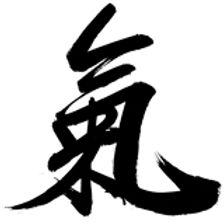
Qi (pronounced “chee”) is the vital life force that flows through all living things. It’s the energy that makes you alive, not just biologically functioning.

Western science is just beginning to understand what Taoist masters have known for millennia: the body is not just a mechanical system. It’s an energetic system. Your thoughts, emotions, stress, and trauma all affect your energy flow. And when your energy is blocked or depleted, disease and dysfunction follow.

You already know what Qi is, even if you’ve never heard the term:

    • That feeling of being “drained” after dealing with certain people
    • The surge of energy you get from nature or inspiring music
    • The heaviness in your chest when you’re sad
    • The lightness you feel after good laughter

That’s Qi. And learning to sense, cultivate, and direct your Qi is one of the most powerful skills you can develop.

In my healing work, I teach people to become aware of their energy body. Once they can feel their Qi, they can identify blockages, restore flow, and tap into their natural vitality. It’s not mystical—it’s embodied awareness.

How Taoism Differs From Religion

This is a crucial distinction, and one I address constantly.

Taoism as a philosophy is not a religion. There’s no deity to worship, no holy book to obey, no heaven or hell, no sin or salvation.

Religious Taoism does exist—it developed later in Chinese history and includes temples, priests, and deities. But philosophical Taoism, which is what I teach, is a practical system for living in harmony with nature.

You don’t have to “believe in” Taoism. You can test it, experience it, and practice it regardless of your religious background. I’ve worked with Christians, Jews, Muslims, Buddhists, and atheists—all have found Taoist principles compatible with their worldview.

Taoism simply asks: Are you willing to align with the natural way things work?

Practical Applications in Daily Life

Enough theory. How does this actually work in real life?

Let me give you some concrete examples from my own journey and the thousands of clients I’ve guided:

In Decision-Making:
Instead of making pro/con lists and overthinking, Taoist practice teaches you to sense the right path. You drop into your body, feel your energy, and notice what naturally flows versus what requires force. The decisions that align with Tao feel clear and light, even if challenging. The ones that don’t feel heavy and resistant.

In Relationships:
Taoist principles teach you to honor natural boundaries and cycles. Not every conflict needs immediate resolution. Not every emotion needs expression. Sometimes the most powerful thing you can do is create space and allow things to settle naturally.

In Work:
Apply Wu Wei to your productivity. Notice your natural energy rhythms. Stop forcing yourself to work when your energy is low and rest when your energy is high. When you align your work with your natural flow, you accomplish more with less effort.

In Health:
Taoist practices like Qi Gong, energy cultivation, and mindful eating help you tune into your body’s wisdom. Instead of following external rules about what you “should” do, you learn to sense what your body actually needs.

In Leadership:
The best leaders I work with have learned to lead like water, not fire. They don’t dominate—they influence. They don’t force—they facilitate. They create conditions where excellence emerges naturally.

Why Taoism Matters in the 21st Century

You might be wondering: Why should I care about a 2,600-year-old Chinese philosophy?

Because we’re living in a world that’s desperately out of balance.

We’re overwhelmed, overstimulated, and overworked. We’ve lost touch with natural rhythms. We’re disconnected from our bodies, from nature, from our own innate wisdom.

The problems we face—burnout, anxiety, environmental crisis, political polarization—all stem from the same root: we’ve forgotten how to align with the Tao.

Taoism offers an antidote. It teaches us:

  • How to find calm in chaos
  • How to achieve without exhaustion
  • How to lead without dominating
  • How to heal without forcing
  • How to live with less stress and more joy

This isn’t about rejecting modern life or moving to a monastery. It’s about bringing ancient wisdom into contemporary challenges.

I spent 150+ calls a day as a financial manager before I discovered Taoism. I was successful by external measures, but miserable internally. When my teacher looked at me and saw my unhappiness, everything changed.

For seven years, I studied one-on-one with a Taoist master. I learned to read the body’s energy, to heal trauma at its root, to guide others back to their natural state. Now, as the world’s only Taoist Niranam therapist, I help people heal in days what typically takes years.

Because when you align with Tao, healing accelerates. Transformation becomes natural. Life gets simpler.

Your First Steps on the Taoist Path

Ready to experience Taoism for yourself? Here’s where to start:

Practice Present-Moment Awareness:
Right now, notice your breath. Don’t change it—just observe. Is it shallow or deep? Fast or slow? Tense or relaxed? This simple act of noticing is the foundation of Taoist practice.

Observe Natural Rhythms:
Pay attention to your energy throughout the day. When do you feel most alert? When do you naturally want to rest? Instead of fighting these rhythms, work with them.

Practice Wu Wei in Small Ways:
Next time you face a decision, pause before acting. Ask yourself: “Am I forcing this, or is it flowing naturally?” Notice the difference in how each path feels in your body.

Spend Time in Nature:
Nature is the ultimate teacher of Tao. Watch how water flows, how trees bend in wind, how seasons change without effort. The Tao is already there—you just need to observe.

Read the Tao Te Ching:
This ancient text, written by Lao Tzu, is the foundational Taoist text. Don’t try to understand it intellectually. Read a passage, sit with it, and let it reveal itself over time.

The Journey Continues

Taoism isn’t a destination—it’s a path. It’s not something you achieve—it’s something you practice.

Every moment offers a choice: Will you force or will you flow? Will you fight against life or dance with it?

The Tao is always available. You don’t need special training or years of study to begin. You just need willingness to align with what’s already here.

In a world addicted to hustle and overwhelmed by noise, Taoism is a clear invitation back to flow. You don’t have to fight life. You have to learn how to dance with it.

And that dance? That’s the Taoist Way.